

Ghee Goodness: When to Use Ghee vs. Butter vs. Oil
Ghee’s been around for thousands of years in Ayurvedic and South Asian cooking, and the rest of the world is now catching up! It sits in that sweet spot between butter and oil, and it’s perfect for high-heat, everyday cooking.
Find out more about ghee, when to use it and how to find the best ghee in Australia!
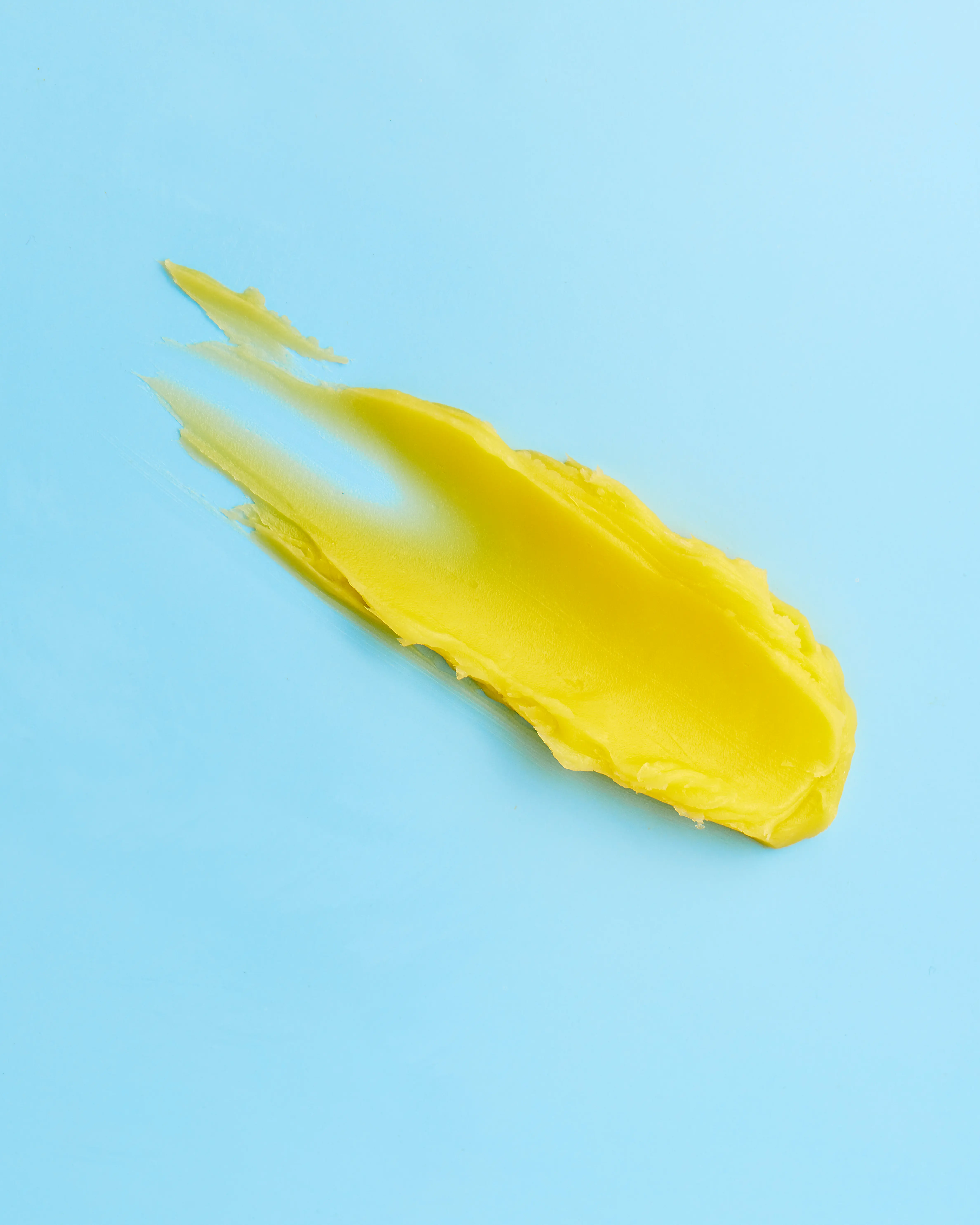
What is ghee, exactly?
Ghee is a type of clarified butter. It’s made by gently simmering butter until the water evaporates and any milk solids (like lactose and casein) separate and are removed. What’s left is pure butterfat, and this process is what gives ghee its nutty flavour and high smoke point. In other words, ghee combines the flavour of butter with the cooking stability of oil, which is why it’s so versatile!
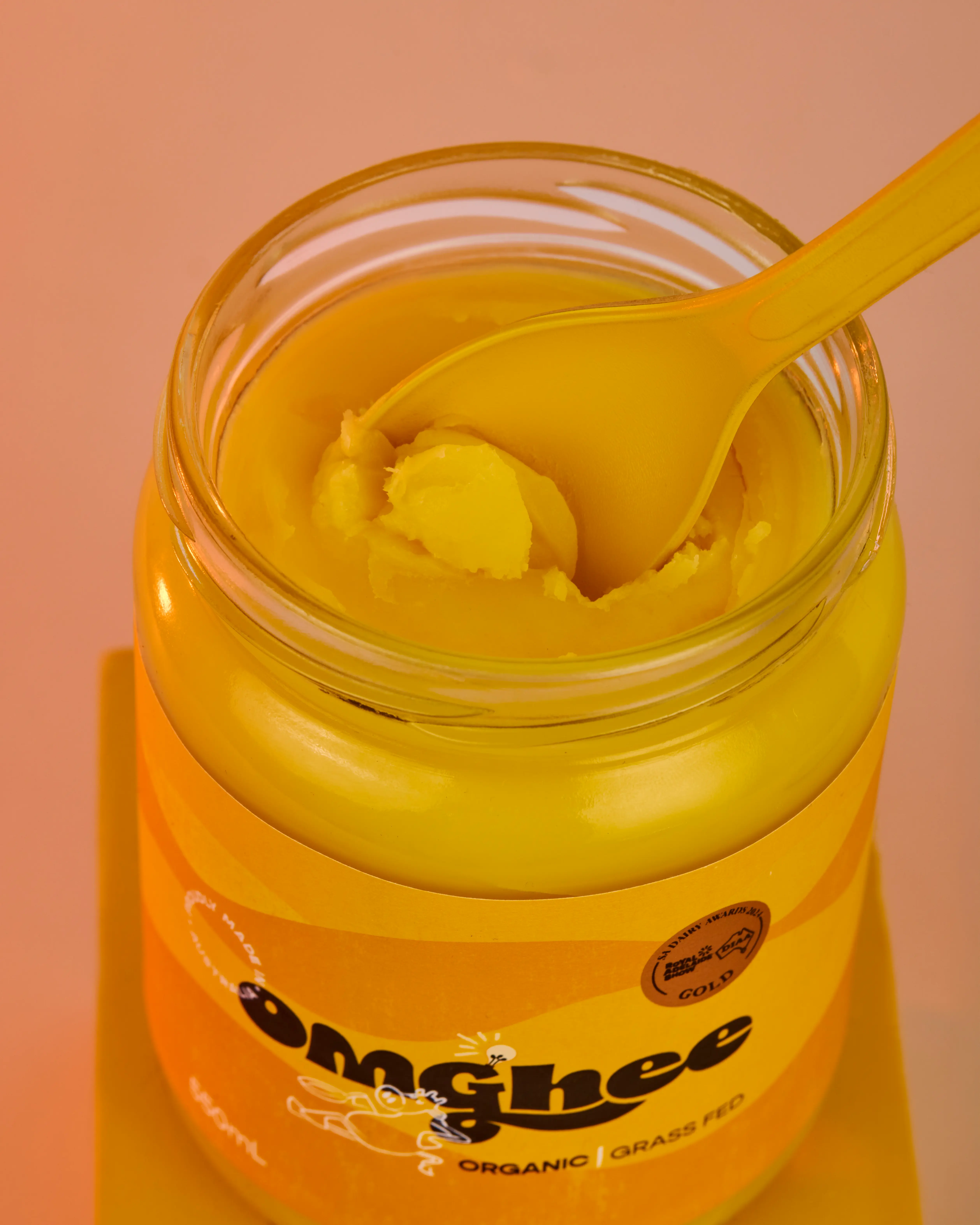
The health benefits of ghee
Like most things we cook with, ghee is great in moderation. Here are some of its main health benefits:
- It’s naturally lactose- and casein-free. Lactose is a milk sugar, while casein is a milk protein, and they’re the two components of milk solids that are linked to digestive issues. The way ghee is made gets rid of these ingredients, so it’s well tolerated by people who are sensitive to lactose or dairy. If you struggle to digest butter, ghee could be a good option! (Just note that if you’re allergic to dairy, it’s best to steer clear of ghee.) Fun fact: In Ayurveda, ghee is known for nourishing and supporting digestive strength, which is known as “agni.”
- It’s rich in good fats. Ghee contains short- and medium-chain fatty acids, which are easier to digest and absorb. These kinds of fats are transported straight to the liver, where they’re converted to energy. They can also support gut health and reduce inflammation.
- It boosts nutrient absorption. Ghee is high in vitamins A, D, E and K, which are key to immunity, eye and bone health. The dietary fats in ghee also help our body to absorb all those vitamins from other foods - think leafy greens, eggs and fish.
- It’s a stable cooking fat. Thanks to ghee’s good fats, it’s less prone to oxidisation at high cooking temps. In other words, cooking with ghee means your food holds onto its flavour and nutritional value! Since ghee is heat-stable, it’s better suited for sautéing and stir-frying. It’s also a great alternative to butter, which contains water and milk solids so it burns at higher temps, and margarine or vegetable oils, which are ultra-refined and high in polyunsaturated fats that oxidise when heated.
Nutritionist tip: If you’re looking for a finishing oil to drizzle over salads or roast veg, olive oil is the ultimate for that! It’s rich in heart-healthy fats and antioxidants to protect against inflammation and a number of chronic diseases.
How to find a good ghee
Ghee is having a moment, and not all the options on the market are the same. From production to purity, here’s what to look for when you’re shopping for ghee!
- Quality of the butter source. Premium ghee is made with organic, grass-fed butter, which has the highest quality fatty acids and fat-soluble vitamins.
- Small-batch, slow processing. Artisanal ghees are simmered slowly to clarify fat and transform the texture of butter into ghee. It’s a time-consuming process that leads to the most flavourful, pure ghee!
- Certified organic. To get this certification, ghee prods need to meet rigorous standards and prove they’re free from pesticides and GMOs.
- Single ingredient. The best ghee contains one ingredient - ghee! No oils, colours, additives or fillers. Steer clear of long ingredient lists, “ghee blends” or ghee-based products that mix different fats.
- Shelf-stable. A clean ghee is stable at room temperature and doesn’t need to be stored in the fridge. Try to keep your ghee away from direct sunlight or warm areas of your kitchen!
- Clear labelling about lactose and casein. Good ghee will be proud about its lack of milk solids, making it easier on digestion for most people.
- The right texture, aroma and flavour. High-quality ghee is smooth, with a golden colour and a toasty scent. It shouldn’t be grainy or overly yellow.
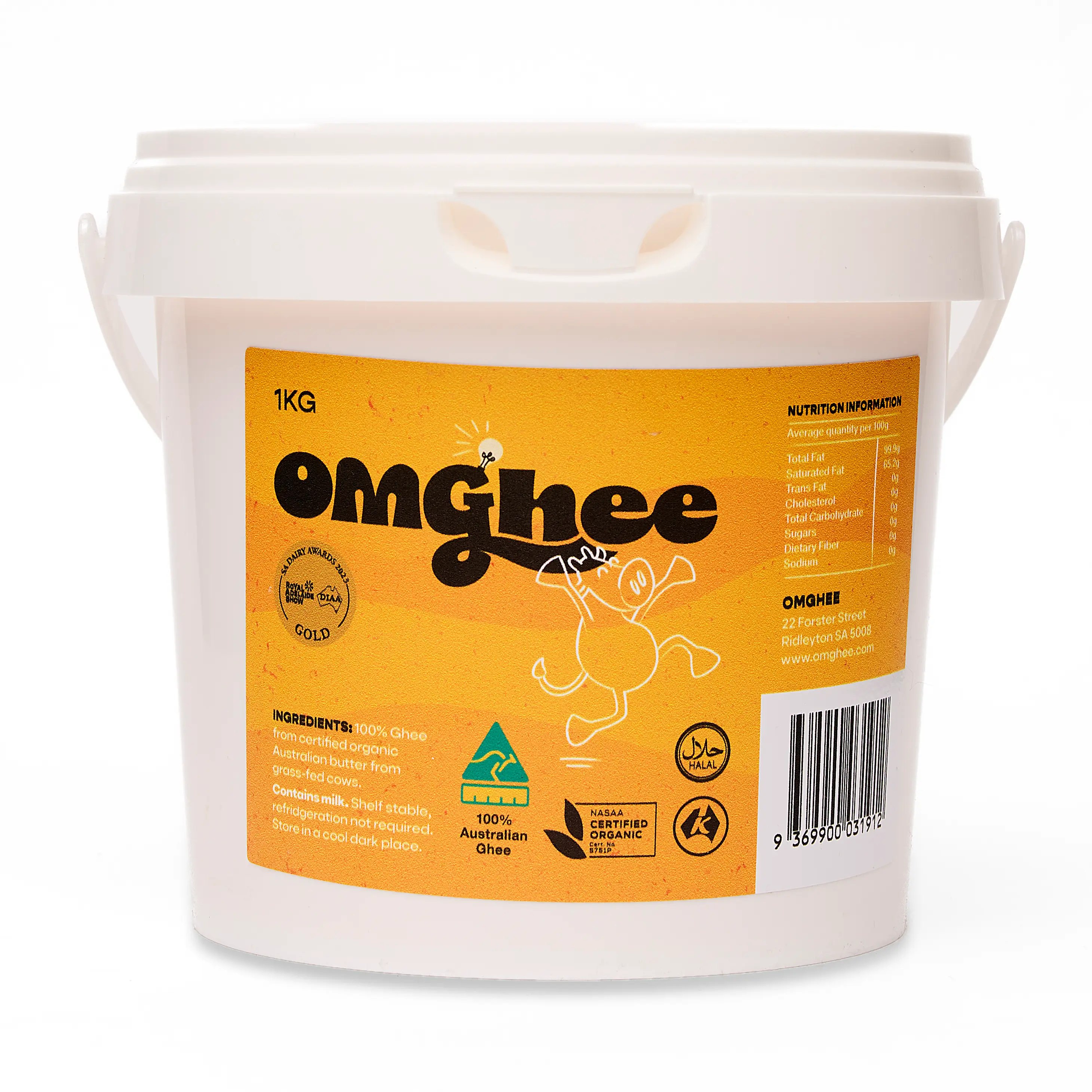
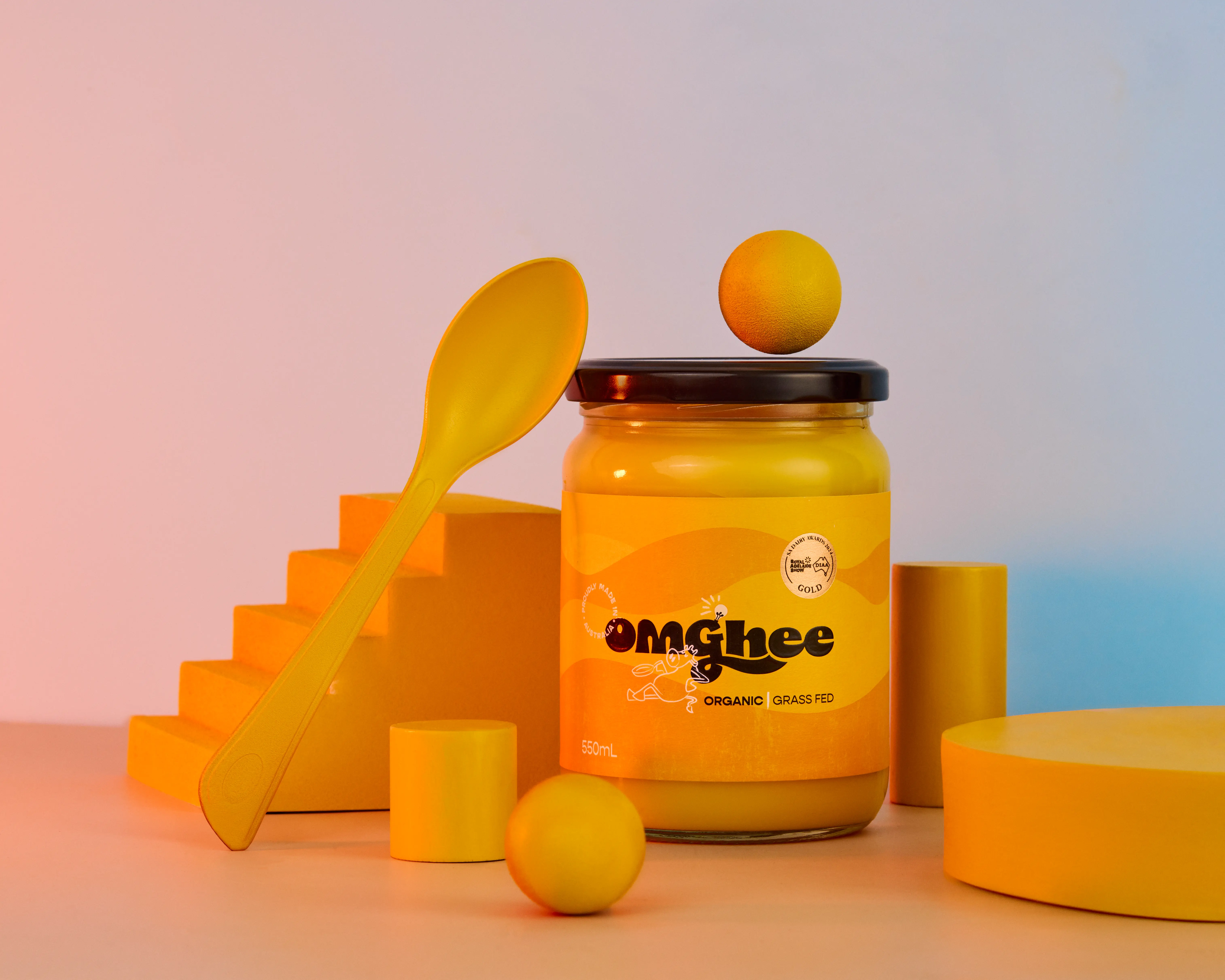
GoodnessMe pick: We love OMGhee’s Organic Ghee. It’s made with just 100% pure Aussie, grass-fed butter, which is simmered for seven hours in small batches. It’s bursting with gut-friendly, immune-boosting good fats, and we’re obsessed with the beautiful colour!
OMGhee’s range comes in a few different sizes:
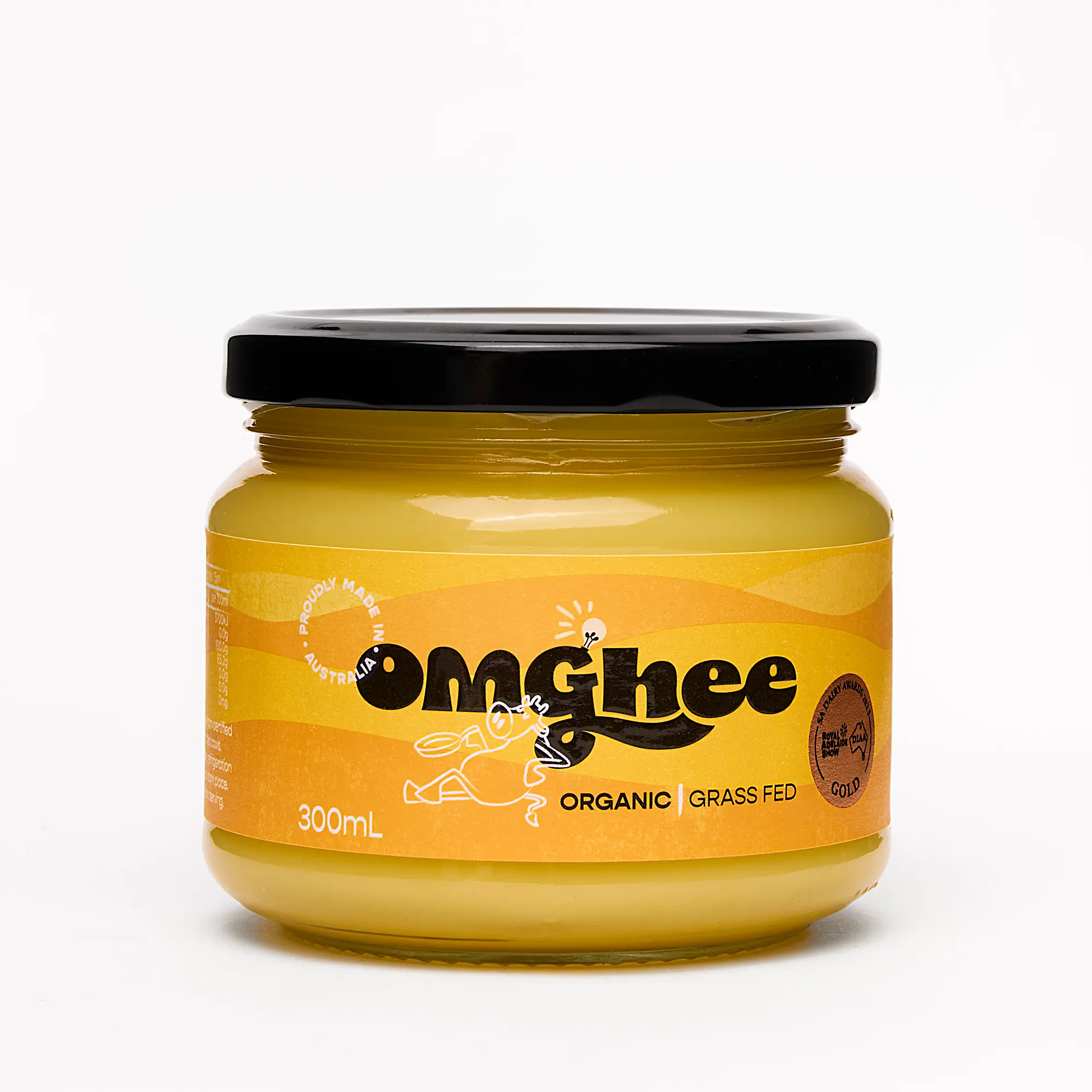
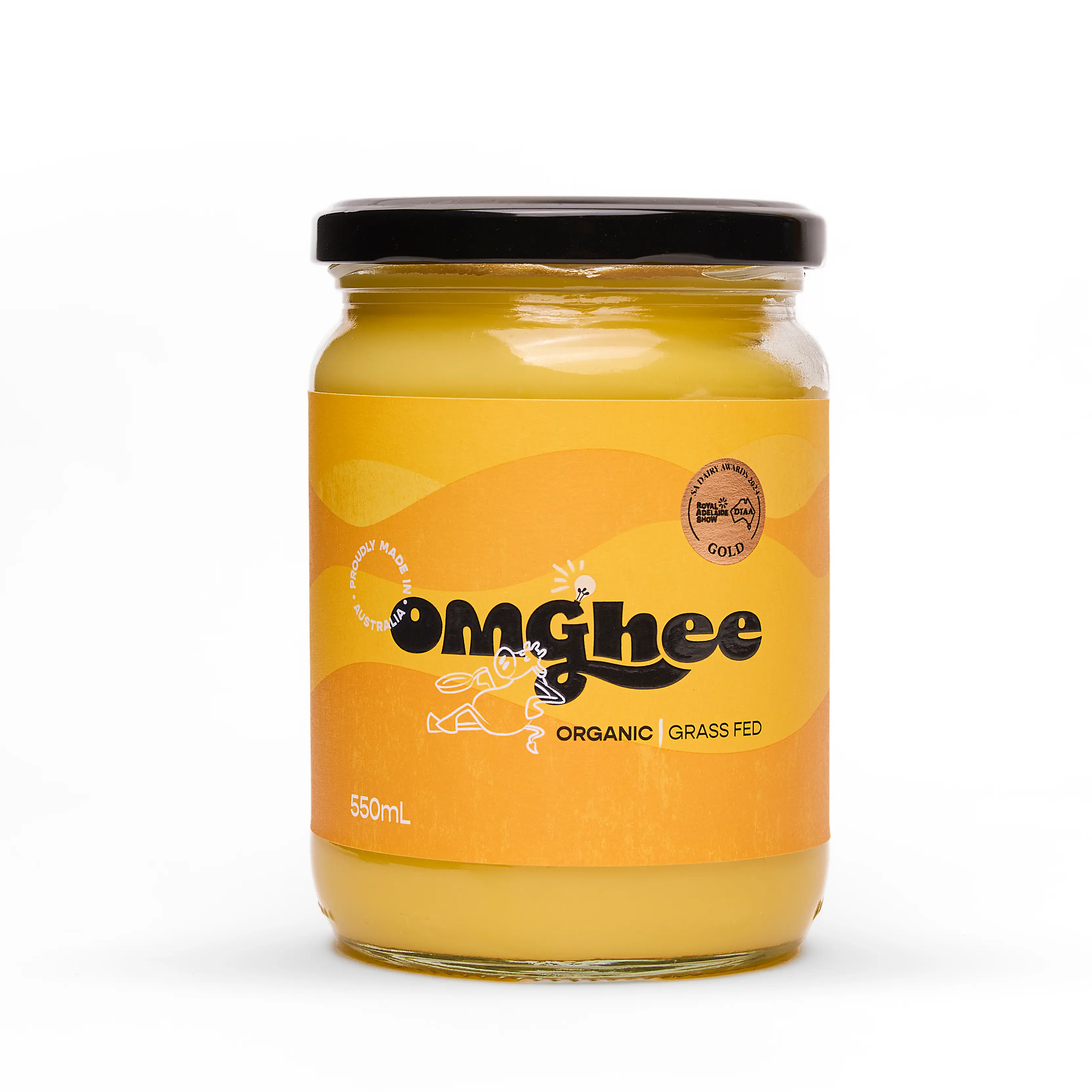
- OMGhee Australian Organic Grass-Fed Ghee 1kg - fam size!
Ghee vs butter vs oil: Which one should you use?
Butter, oil and ghee can all be part of a balanced kitchen, but they taste and handle heat differently.
Check out this cheat sheet to help you figure out when to cook with each one!
| Ghee | Butter | Olive oil |
|---|---|---|
| High (~250°C) smoke point | Low (~150°C) smoke point | Medium (~190-210°C) smoke point |
| Excellent heat stability | Fair heat stability | Moderate heat stability |
| Nutty, buttery flavour | Rich, creamy flavour | Fruity, peppery flavour |
| High-heat cooking | Low-heat cooking | Cold or gentle heat cooking |
| For frying, sautéing, baking | For poaching, braising | For drizzling, roasting, light sautéing |
Nutritionist tip: When cooking with ghee, swap out butter at a 1:1 ratio and a good serving size is about 15g. My fav ways to use ghee are for stir-fries, baking, fried eggs and French toast! You could also stir it into porridge, or add a dollop to soups before serving!
Add ghee to your cooking lineup
From brekkie to dinner and beyond, cooking with ghee is a great way to get a dose of good fats and a little goes a long way. Shop OMGhee at GoodnessMe to find out what the hype is about!